
Solo acts
(Better together?)

I was late to the WHAM! documentary on Netflix (it came out in 2023), but I finally saw it last week, and I haven’t stopped thinking about it.
In particular, I was feeling empathy for both George Michael and Andrew Ridgeley when the curtain closed on Wham!.
Not a disbandment, not a demise, but an ending.
One that seemed to be mutually consensual.
I especially felt for Andrew Ridgeley, namely that he didn’t get enough credit for the role he played in Wham!’s success. Because George Michael’s star burned so bright, Andrew often looked as if George did him the favor of letting him tag along on stage. To the world outside of Wham! fans (and although I was into their music, I never considered myself a fan), he often looked more like a court jester on stage than a musician.
As I said in a recent Substack Note:
George Michael was the star and the talent, but Andrew was the one who not only had the grace and humility to know that, but also the immense love to push his best friend front and center even when he knew he was being edged out.
And Andrew was talented, but in a much more subtle way. I think to the rest of the world, he looked like he had no business being there, almost clownish.
But I think the reality is that without him, they wouldn’t have been. And George knew that.
It got me thinking about other mega-successful duos that split either because one or both partners outgrew the act, or they wanted more authorship. Such as…
Sonny Bono and Cher.
Daryl Hall and John Oates.
Paul Simon and Art Garfunkel.
Dean Martin and Jerry Lewis.
Fred Astaire and Ginger Rogers
Annie Lennox and Dave Stewart
In these cases, one’s career soared after they went solo, while the other either held their own or fizzled out.
(Did Daryl Hall “soar”? Debatable, I suppose. But he certainly found post-H&O success with a hit single and Live at Daryl’s House.)
I also thought about bands with frontmen/women in similar situations. For example:
Sting and the Police.
Debbie Harry and Blondie.
(The Beatles are in a category of their own.)
Ditto for when a prominent actor leaves an ensemble cast.
George Clooney leaving ER.
John Travolta leaving Welcome Back, Kotter.
Valerie Harper leaving The Mary Tyler Moore Show.
And I’m sure there are cases when one seemingly couldn’t survive without the other (I’m looking at you, Kajagoogoo and Limahl).
I can’t remember if he said it in an interview or his book, but I recall Duran Duran’s John Taylor asserting that a solo act was never as good as the original group, even if s/he went on to achieve even more stardom.
And I have to say, I can’t think of an example in which I disagree with him.
It’s not that they were necessarily worse off than their former incarnations (except, ahem, Kajagoogoo). But I would make the case that there was a certain element of magic missing once the solo act struck out on his or her own.
I also recall Simon Le Bon saying that if Duran Duran ever disbanded for good, he would never go solo. And I understand why.
And youz all know by now that I still not-so-secretly wish Andy Taylor would rejoin Duran Duran and never leave.
Because let’s face it: each of these duos/groups had chemistry. Even if/when they hated each other behind the scenes. Even when one shined a little brighter than the other(s). The whole was greater than the sum of its parts.
And even when you know why such reunions can’t/won’t happen, you still miss the magic.
As I watched the documentary, I found myself missing Wham!.
And Hall & Oates. And the Police.
This rabbit hole next led me to examples in which artists/performers were predominantly solo acts but were just as or more successful as collaborators.
For instance, I always argued that Robert Redford had more on-screen chemistry with Paul Newman than any leading female co-star.
Ditto with Matt Damon and Ben Affleck.
Meg Ryan and Tom Hanks.
Tina Turner and Mick Jagger: that Live Aid performance.
Donny and Marie Osmond. (I know. Siblings. But still. Something worked with those two sibs in particular.)
The cast of The West Wing.
The Brat Pack.
For pretty much my entire adult life, I was a solo act.
The few love relationships I had barely lasted long enough to even be called relationships, despite my grieving their endings as if we’d been together for a lifetime.
Yet, as I said in “Why I Loved Singlehood,” I reached a point when I was happy to be a solo act. Heck, I was successful as a solo act.
When Craig and I became friends, something was noticeable right off the bat:
We had chemistry.
I described it here:


We excelled in public speaking situations, too.
When we got together romantically, dare I say, Craig and I were a power couple. And that’s just professionally.
We were a power couple personally, too. At least at the onset.
Our reasons for separating in 2024 had nothing to do with outgrowing each other or the marriage, or wanting more autonomy, or ego clashes. No, they’re way more complicated.
Yet since we’ve been living apart, Craig has been building a different life. And Lord knows I’ve been trying to.
In other words, despite being married, it’s as if we’re solo acts.
Certainly, we could each be successful as a solo act. We were before. We might already be now.
But I’m gonna say it:
I think we’re better together.
Still.
Even with the complications and the impasses.
You could see it during our road trip this past July, which I described in
We are the whole that is greater than the sum of its parts.
We are Newman and Redford. The West Wing cast.
We are also Wham!.
By comparing us to Wham!, am I intimating that one star was brighter than the other?
No. Rather, we took turns being George Michael and Andrew Ridgeley.
At the height of our union, we took turns stepping aside so the other could shine. We were quick to turn the spotlight toward the other. If one was in front, the other wasn’t dragging behind but rather propping him/her up.
Apart, Craig and I are talented. We shine. We excel. We succeed. We manifest.
But together…
We are magic.
And that’s why I still can’t help but root for that reunion against all odds.
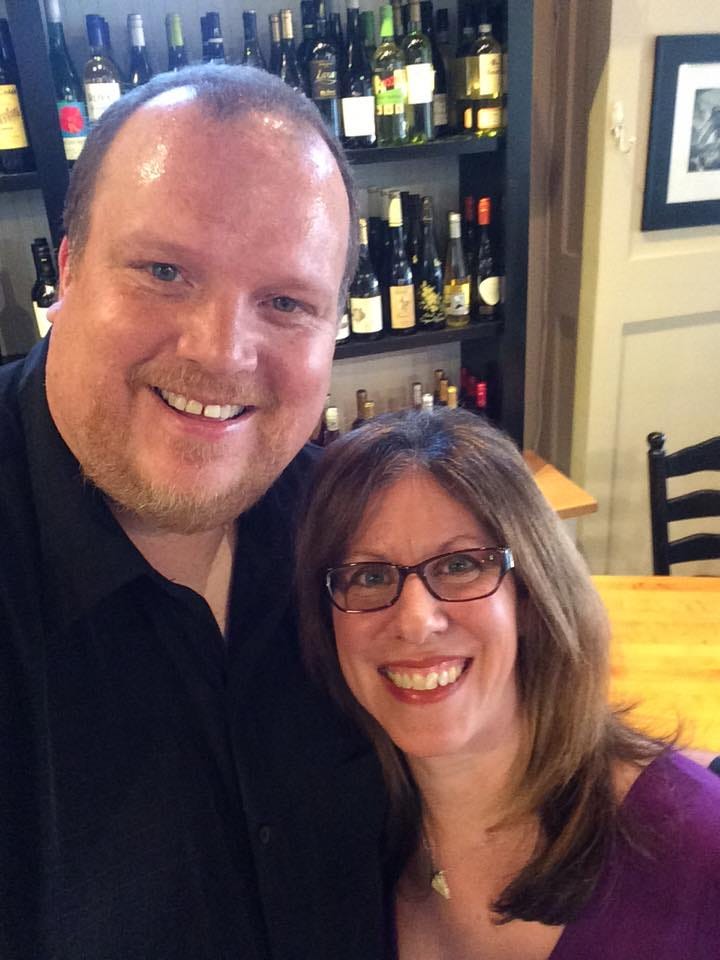
I read somewhere that Jane Goodall and her first husband's marriage was compared to parallel train tracks--both headed in the same direction but each their own person.